
University certificate







The world's largest faculty of nursing”
Introduction to the Program
Actualiza tus estrategias asistenciales mediante la Medicina Nuclear con un Postgraduate certificate 100% online”
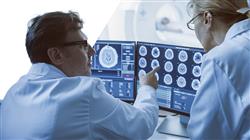
La administración de los radiofármacos empleados en la Medicina Nuclear requiere una atención meticulosa y precisa para evitar errores de dosificación y asegurar que los pacientes reciban la cantidad adecuada de radiación. Esto hace que la Enfermería se haya convertido en una profesión crucial en esta área, en la cual los enfermeros son los responsables de tratar con la mayor responsabilidad posible los materiales radioactivos.
Por este motivo, para estos profesionales es realmente importante actualizarse en este ámbito para asistir con mayor eficacia a los pacientes, además de para explicarles los riesgos y beneficios de estos tratamientos o brindarles apoyo emocional y psicológico durante el proceso. Bajo este contexto surge el presente Postgraduate certificate, que aborda las diferentes líneas de la Medicina Nuclear, desde estudios isotópicos del sistema musculoesquelético hasta estudios en Neurología, pasando por patología digestiva, endocrinología, cardiología y neumología. Además, el enfermero ahondará en la Gammagrafía ósea, salival, de tránsito esofágico, del vaciamiento gástrico y hepatoesplénica, aparte de recorrer las investigaciones isotópicas para el diagnóstico de patología tiroidea y paratiroidea.
Pero lo mejor es que el formato del programa es 100% online para que el alumno pueda actualizarse desde casa o cualquier lugar a su propio ritmo, siempre en función de sus necesidades y disponibilidad. Además, el título cuenta con un gran equipo docente formado por expertos en Medicina Nuclear y Enfermería, que aportará un soporte constante al estudiante. Sin duda, una oportunidad realmente valiosa que lanzará la carrera del enfermero hacia nuevas cotas.
Estás ante la oportunidad académica perfecta para ponerte al día de los últimos estudios isotópicos del sistema musculoesquelético”
Este Postgraduate certificate en Nuclear Medicine for Nursing contiene el programa científico más completo y actualizado del mercado. Sus características más destacadas son:
- El desarrollo de casos prácticos presentados por expertos en Medicina Nuclear para Enfermería
- Los contenidos gráficos, esquemáticos y eminentemente prácticos con los que está concebido recogen una información científica y práctica sobre aquellas disciplinas indispensables para el ejercicio profesional
- Los ejercicios prácticos donde realizar el proceso de autoevaluación para mejorar el aprendizaje
- Su especial hincapié en metodologías innovadoras
- Las lecciones teóricas, preguntas al experto, foros de discusión de temas controvertidos y trabajos de reflexión individual
- La disponibilidad de acceso a los contenidos desde cualquier dispositivo fijo o portátil con conexión a internet
Recorre los últimos avances en Ventriculografía en equilibrio y de primer paso consultando dinámicos vídeos explicativos o esquemas interactivos”
El programa incluye en su cuadro docente a profesionales del sector que vierten en esta capacitación la experiencia de su trabajo, además de reconocidos especialistas de sociedades de referencia y universidades de prestigio.
Su contenido multimedia, elaborado con la última tecnología educativa, permitirá al profesional un aprendizaje situado y contextual, es decir, un entorno simulado que proporcionará una capacitación inmersiva programada para entrenarse ante situaciones reales.
El diseño de este programa se centra en el Aprendizaje Basado en Problemas, mediante el cual el profesional deberá tratar de resolver las distintas situaciones de práctica profesional que se le planteen a lo largo del curso académico. Para ello, contará con la ayuda de un novedoso sistema de vídeo interactivo realizado por reconocidos expertos.
Profundiza en los estudios más relevantes para el diagnóstico del Tromboembolismo Pulmonar gracias a este programa”
Accede a una completísima biblioteca digital sobre Nuclear Medicine for Nursing con recursos disponibles las 24 horas del día”
Syllabus
The Postgraduate certificate in Nuclear Medicine for Nursing has a flexible structure, allowing students to adjust their pace of study to their individual needs and time availability. In this way, and thanks to the online modality, they will save on the need to travel to on-site teaching centers and forget about predetermined schedules. In addition, the program uses the Relearningmethodology, which consists of the directed reiteration of the concepts of the syllabus through dynamic educational resources, such as interactive diagrams or explanatory videos.

Enjoy a syllabus that will take you through the entire history of Nuclear Medicine and its different fields of application"
Module 1. Nuclear Medicine I
1.1. What is Nuclear Medicine?
1.1.1. Introduction to Nuclear Medicine
1.1.2. History of Nuclear Medicine
1.1.3. Fields of Application of Nuclear Medicine
1.1.4. Radiopharmaceuticals
1.2. Physical Fundamentals of Nuclear Medicine
1.2.1. Key Concepts
1.2.2. Structure of Matter
1.2.3. Electromagnetic Radiation
1.2.4. Atomic Structure Bohr Atom
1.2.5. Nuclear Structure
1.2.6. Radioactivity and Nuclear Reactions
1.2.7. Interaction of Radiation with Matter
1.3. Chemical Fundamentals of Nuclear Medicine
1.3.1. Key Concepts
1.3.2. Obtaining Radionuclides
1.3.3. Radionuclide Generators
1.3.4. Structure of a Molybdenum/Tecnetium Generator
1.3.5. Tagging Mechanisms
1.4. Radiopharmaceuticals
1.4.1. Characteristics of the Ideal Radiopharmaceutical
1.4.2. Physical Form and Routes of Administration of Radiopharmaceuticals
1.4.3. Localization Mechanisms of Radiopharmaceuticals
1.5. Fundamentals of Radiological Prevention in Nuclear Medicine
1.5.1. Key Concepts
1.5.2. Quantities and Units
1.5.3. Fundamentals of Radiological Prevention in Nuclear Medicine
1.5.3.1. Patients
1.5.3.2. Workers and Members of the Public
1.5.3.3. Pregnancy and Breastfeeding
1.6. Fundamentals of Radiological Prevention and Medical Physics in Nuclear Medicine
1.6.1. Key Concepts
1.6.2. Radiation Detection and Measurement
1.6.2.1. Gas Ionization Detectors
1.6.2.2. Semiconductor Detectors
1.6.2.3. Scintillation Detectors
1.6.3. Radiation Protection Standards
1.7. Radioactive Waste
1.7.1. Key Concepts
1.7.2. Radioactive Sources out of Use
1.7.3. Solid Waste Materials with Radioactive Content
1.7.4. Liquid Radioactive Waste
1.8. Instrumentation in Nuclear Medicine
1.8.1. Key Concepts
1.8.2. Activimeter or Dose Calibrators
1.8.3. Gamma Camera and SPECT
1.8.3.1. Gammacamera Detectors
1.8.3.2. Collimation
1.8.3.3. Image Correctors
1.8.3.4. Planar Image Formation
1.8.3.5. Tomographic Acquisition
1.8.4. PET
1.8.4.1. Detectors Used in PET
1.8.4.2. PET Image Formation
1.9. Radiometabolic Therapy
1.9.1. Treatment of Metastatic Bone Pain
1.9.2. Treatment of Differentiated Thyroid Cancer
1.9.3. Treatment of Hyperthyroidism
1.9.4. Treatment of Non-Hodgkin's Lymphoma
1.9.5. Treatment of Neuroendocrine Tumors
1.9.6. Radiosynoviorthesis
1.10. Scans performed in PET. Nursing care and attention
1.10.1. Radionuclides and radiopharmaceuticals in PET
1.10.2. Types of Studies
1.10.3. Nursing Care at the PET-FDG
1.10.4. Nursing Care in the PET-Colina
1.10.5. Nursing care in the PET-Vizamil PET
1.10.6. Nursing Care at the PET-DOPA
1.10.7. Nursing Care at the PET-PSMA
1.10.8. Nursing Care in the Myocardial Viability PET
Module 2. Nuclear Medicine II Isotopic Studies
2.1. Isotopic studies of the musculoskeletal system. Nursing care and attention
2.1.1. Bone scintigraphy
2.1.2. Three-phase bone scintigraphy
2.1.3. Bone Marrow Gammagraphy
2.1.4. Isotopic studies for diagnosis in Inflammatory and Infectious Pathology
2.1.4.1. 67Ga
2.1.4.2. Labeled leukocytes
2.2. Isotopic studies in Digestive Pathology. Nursing Care and Attention
2.2.1. Anatomophysiological Recall
2.2.2. Salivary Gammagraphy
2.2.3. Esophageal Transit Scintigraphy
2.2.4. Gastric scintigraphy Detection of ectopic gastric mucosa Meckel's Diverticulum
2.2.5. Gastric Emptying Scintigraphy
2.2.6. Gammagraphy for detection of Gastroesophageal Reflux
2.2.7. Gammagraphy for the diagnosis of Digestive Hemorrhage
2.3. Isotopic studies in splenic and biliary pathology. Nursing Care and Attention
2.3.1. Anatomophysiological Recall
2.3.2. Hepatosplenic Scintigraphy
2.3.3. Hepatobiliary Gammagraphy
2.3.4. Bad absorption of biliary salts
2.4. Isotopic studies in Endocrinology. Nursing Care and Attention
2.4.1. Isotopic studies for diagnosis from Thyroid Pathology
2.4.2. Isotopic studies for diagnosis from Parathyroid Pathology
2.4.3. Isotopic studies for diagnosis from Adrenal Glands Pathology
2.5. Isotopic studies in Cardiology. Nursing Care and Attention
2.5.1. Study of Cardiac Function
2.5.1.1. Equilibrium ventriculography
2.5.1.2. First-pass ventriculography
2.5.2. Study of Myocardial Perfusion
2.5.2.1. Myocardial perfusion SPECT during exercise
2.5.2.2. Myocardial perfusion SPECT at rest
2.5.3. PET
2.6. Isotopic studies in Pneumology. Nursing Care and Attention
2.6.1. Anatomophysiological Recall
2.6.2. Studies for the diagnosis of pulmonary thromboembolism
2.6.2.1. Pulmonary Ventilation Scintigraphy
2.6.2.2. Pulmonary Perfusion Scintigraphy
2.6.3. Diffuse Interstitial Lung Disease Evaluation Scintigraphy
2.6.4. Gammagraphy in the evaluation of Infectious Processes
2.6.5. Gammagraphy in the evaluation of Thoracic Neoplasms
2.7. Isotopic studies in Neurology. Nursing Care and Attention
2.7.1. Anatomophysiological Recall
2.7.2. Brain perfusion SPECT Technique Clinical applications
2.7.3. Studies for the diagnosis of Epilepsies
2.7.3.1. CSF fistula detection. Cisternography
2.7.4. Studies for the diagnosis of Movement Disorders
2.7.4.1. Studies for the differential diagnosis of Parkinsonisms
2.7.4.2. Study of Dopamine Transporters DATSCAN
2.7.4.3. Study of postsynaptic D2 Dopaminergic Dopamine Receptors. 123I-IBZM
2.7.4.4. Myocardial Sympathetic Sympathetic Denervation Study with 123I-MIBG
2.7.5. Studies for the diagnosis of Cerebrovascular Pathology and Encephalic Death 99Tc-HMPAO
2.8. Isotopic studies in Nephrourology. Nursing Care and Attention
2.8.1. Anatomophysiological Recall
2.8.2. Studies for the diagnosis of Renal Functionality.. Glomerular filtration
2.8.3. Isotopic Renogram
2.8.4. Renal Cortical Gammagraphy: DMSA
2.8.5. Isotopic cystography
2.8.6. Scrotal or testicular scintigraphy
2.9. Isotopic studies in Vascular Pathology. Nursing Care and Attention
2.9.1. Anatomophysiological Recall
2.9.2. Isotopic phlebography
2.9.3. Lymphogrammagraphy
2.9.4. Sentinel lymph node study
2.9.4.1. Sentinel Lymph Node in Breast Cancer
2.9.4.2. Sentinel lymph node in malignant melanoma
2.9.4.3. Sentinel node in other applications
2.10. Isotopic studies in Oncology. Nursing Care and Attention
2.10.1. Tracking with 67 Ga citrate
2.10.2. Tracking with 99mTc-sestaMIBI
2.10.3. Traceback with 123I-MIBG and 131I-MIBG
2.10.4. Traceback with labeled peptides
2.10.5. Traceback with labeled monoclonal antibodies

You will only need a PC or Tablet with an Internet connection to benefit from the most global and up-to-date view of Nuclear Medicine for Nursing"
Postgraduate Certificate in Nuclear Medicine for Nursing
The area of nuclear medicine has gained great relevance in recent years, due to technological advances and the benefits it offers for the diagnosis and treatment of various diseases. Nurses play a fundamental role in the performance of procedures in nuclear medicine, being responsible for the administration of radiopharmaceuticals, patient care and radioactive waste management. Would you like to specialize in this field? At TECH Global University you will find the ideal program. The Postgraduate Certificate in Nuclear Medicine for Nursing is a high-level Postgraduate Certificate that, in addition to providing you with the latest tools to update your knowledge in the field, will provide you with a totally effective and dynamic online methodology. Through the curriculum, you will learn the most relevant and updated concepts in this field. Thus, you will be able to perform competently and safely in the area of nuclear medicine.
Training in nuclear medicine
This TECH Postgraduate Certificate is designed to offer practical and specialized training in this area of medicine. Through a comprehensive curriculum, you will learn the physics of nuclear medicine, the principles of molecular imaging and radiopharmaceutical administration. You will also study radioactive waste management and the safety measures required to work in a radioactive environment. Finally, you will learn how to perform nuclear medicine procedures and the handling of specialized equipment, which will allow you to acquire the necessary experience to work with confidence in this area. All this, you will do through innovative methodologies that incorporate time flexibility, interactive immersion, dynamic flow of topics and continuous motivation by experts.