
University certificate







The world's largest faculty of nursing”
Introduction to the Program
With this fully online Master's Degree, you will optimize patient care from a holistic approach and ensure a significant improvement in their overall well-being in the long term”
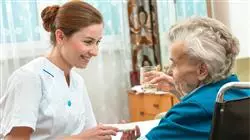
Integrative Medicine has experienced significant growth in recent years, driven by the acceptance of healthy alternatives that reduce invasiveness and side effects of certain treatments. This approach has promoted healthy habits and disease prevention through diet, physical activity, and various diagnostic techniques. In this context, nursing professionals must stay updated to provide high-quality care based on the latest scientific advancements.
This Master's Degree from TECH Global University offers the most recent knowledge in this field, enabling specialists to expand their understanding of new therapeutic strategies and their integration into clinical practice. To achieve this, the program has been designed with a theoretical-practical approach, developed by a team of experts who have gathered the most up-to-date information on the management of chronic diseases such as Fibromyalgia, Chronic Fatigue, allergies, and Cancer. Additionally, it includes knowledge about the relationship between the microbiota and depression, as well as the latest diagnostic techniques. The case studies provided by specialized instructors will allow students to apply this knowledge in their professional practice.
The case studies provided by specialized instructors will allow students to apply this knowledge in their professional practice. No scheduling restrictions and accessible from any device with an internet connection.
Furthermore, graduates can enhance their competencies through 10 exclusive Masterclasses led by a renowned International Guest Director.
You will have access to 10 intensive Masterclasses taught by a prestigious International Guest Director highly specialized in Integrative Medicine”
This Master's Degree in Nursing in Integrative Medicine contains the most complete and up-to-date program on the market. Its most notable features are:
- The development of practical cases presented by experts in Nursing in Integrative Medicine
- The graphic, schematic, and practical contents with which they are created, provide scientific and practical information on the disciplines that are essential for professional practice
- Practical exercises where the self-assessment process can be carried out to improve learning
- Special emphasis on innovative methodologies in Nursing in Integrative Medicine
- Theoretical lessons, questions to the expert, debate forums on controversial topics, and individual reflection assignments
- Content that is accessible from any fixed or portable device with an Internet connection
This is the ideal academic option for nursing professionals who wish to balance a high-quality knowledge update with their work responsibilities”
The program includes a teaching staff composed of professionals from the field of Integrative Medicine Nursing, who contribute their work experience to this program, as well as recognized specialists from leading societies and prestigious universities.
The multimedia content, developed with the latest educational technology, will provide the professional with situated and contextual learning, i.e., a simulated environment that will provide an immersive learning experience designed to prepare for real-life situations.
This program is designed around Problem-Based Learning, whereby the student must try to solve the different professional practice situations that arise throughout the program. For this purpose, the professional will be assisted by an innovative interactive video system created by renowned and experienced experts.
You will master advanced strategies for health prevention and promotion, helping patients reduce the risks of chronic diseases"

Thanks to this university program, you will immerse yourself in the latest developments in Integrative Medicine and its application in patients with Cancer"
Syllabus
The syllabus of this program will allow graduates to delve into the latest developments in Integrative Medicine across 9 modules. The syllabus will explore the approach to oncological patients, musculoskeletal system pathologies, the microbiota, and the gut-brain axis. Additionally, it includes evaluation methods in Integrative Medicine, complementary tests such as genetic testing and microbiota analysis. All content will be available 24/7 for several months, accessible from any computer or tablet.

You will apply cutting-edge, innovative techniques in Environmental Medicine to identify and mitigate the effects of toxic factors on health”
Module 1. Introduction to Integrative Medicine
1.1. History of Integrative Medicine
1.1.1. History of Integrative Medicine
1.2. Foundations and Indications
1.2.1. Foundations of Integrative Medicine
1.2.2. Indications
1.3. How to Develop a Health Plan for the Patient?
1.3.1. The Health Plan: How to Formulate It?
1.4. The Sociology of Health
1.4.1. Aspects of the Social Macrosystem that Affect Human Health
1.4.2. Social Aspects that Impact Access to the System
1.4.3. Limitations to Practicing Integrative Medicine
1.5. Medical History and Comprehensive Evaluation of the Person
1.5.1. Medical History from the IM’s Perspective
1.5.2. Comprehensive Assessment: Objectives and Results
1.6. Integrative Approach from a Social Work Perspective
1.6.1. Social Work and IM
1.6.2. Integrative Approach from the Basis of Social Work
1.7. Biological and Psychological Stages of the Human Being. Developmental Aspects Related to Age
1.7.1. Biological and Psychological Stages in Humans
1.7.2. Age-Related Developmental Aspects.
Module 2. Integrative Medicine and Health Prevention
2.1. Prevention, Health Education and Lifestyles
2.1.1. Preventive Nutrition
2.2. Physical Activity and Sports
2.3. The Patient as a Proactive Individual
2.3.1. The Role of Nursing in Health and Integrative Medicine
2.4. Community Networks as a Pillar of Health Prevention and Promotion
2.4.1. Community Pharmacies
2.4.2. Health Centers
2.4.3. The Family Network
2.4.4. Group of Mutual Aid
Module 3. Approaches and Strategies for Management
3.1. Biological Model
3.1.1. The Interrelation of Physiological Systems
3.1.2. Mitochondrial Physiology and Dysfunction
3.1.3. Chronic Inflammation and Mucosal Permeability Syndromes
3.1.4. Implication of Immune System Disorders in Chronic Pathologies
3.1.4.1. Autoimmunity
3.1.5. The Role of Oxidative Stress
3.1.6. Microbiota
3.1.7. The Physiology of Detoxification
3.2. Systemic Approach
3.2.1. Gestalt
3.2.2. Transgenerational
3.3. Psychoanalytical Approach
3.4. Cosmogony of Oriental Medicine
3.4.1. Anthropological and Philosophical Aspects
3.4.1.1. Cineanthropometry and Relationship with Kinetic Chains
3.4.2. Acupoints from Human Embryology
3.4.3. Scientific Foundations of Contemporary Acupuncture
3.4.4. Microsystems
3.4.4.1. Foot Reflexology
3.4.4.2. Auricular Zone Reflex Technique
3.4.4.3. Other Disciplines (Yamamoto Cranial Acupuncture YNSA)
3.5. Constitutional Imago, Archetype and Diathesis
Module 4. Pathophysiology
4.1. Metabolic Networks
4.1.1. Main Metabolic Pathways and their Clinical Implication
4.1.1.1. Carbohydrate Metabolism
4.1.1.2. Fat Metabolism
4.1.1.3. Protein Metabolism
4.2. Inflammation
4.2.1. Main Inflammatory Mediators and their Pathways
4.2.2. Microbiota and Inflammation
4.2.3. Inflammation in Chronic Pathologies
4.3. Immunity
4.4. Neuropsychiatry and Biological Decoding
4.4.1. Main Neurotransmitters and Their Functions
4.4.2. Gut-Brain Axis
4.4.3. Brain/Immune System Interactions
4.4.4. Microbiota and Depression
Module 5. Diagnosis, Clinical and Complementary Analysis
5.1. Clinical Examination and Initial Contact
5.1.1. Medical History and Anamnesis
5.1.2. Semiological Aspects of Integrative Medicine (IM)
5.1.2.1. Pulsology
5.1.2.2. Neurofocal Dentistry, Oral Health, and Temporomandibular Joint (TMJ)
5.1.2.3. Posturology and Kinetic Chains
5.1.2.4. Chronobiology
5.1.2.5. Chronobiology from a Biochemical Perspective
5.2. Erythrocyte Fatty Acids
5.3. Bone Metabolism
5.4. Heavy Metal Testing
5.5. Study of the Microbiota and Intestinal Permeability
5.6. Genetic Testing
5.7. Food Intolerance
5.8. GSE Allergies, Celiac Disease
5.9. Health Technology
5.9.1. Bioresonance
5.9.2. Thermography
5.10. Other Diagnostic Techniques
5.10.1. Other Diagnostic Techniques. Part I
5.10.2. Other Diagnostic Techniques. Part II
Module 6. Environmental Medicine
6.1. Basic Concepts of Toxicology
6.2. Diseases Caused by Environmental Factors
6.2.1. Respiratory Allergies
6.2.2. Cardiovascular Disease and Heavy Metals
6.2.3. Cancer and Autoimmune Diseases as an Environmental Disease
6.2.4. Chronic Fatigue Syndrome
6.2.5. Central Sensitivity Syndrome
6.2.6. Fibromyalgia
6.3. Electromagnetism
6.4. Chemical and Food Sensitivities
6.5. Endocrine Disruptors
6.6. Creation of Optimal Environments for Health Restoration
Module 7. Approach to Common Chronic Diseases in Integrative Medicine I
7.1. Environmental Diseases
7.1.1. Fibromyalgia
7.1.2. Chronic Fatigue
7.1.3. Electrosensitivity
7.1.4. Multiple Chemical Sensitivity
7.2. Dermatology
7.3. Digestive System
7.3.1. Gastritis
7.3.2. Liver Diseases
7.3.3. Adult Celiac Disease
7.4. Respiratory System
7.4.1. Asthma
7.4.2. Allergy
7.4.3. COPD (Chronic Obstructive Pulmonary Disease)
7.5. Neurology
7.5.1. Migraines
7.5.2. Epilepsy
7.5.3. Cerebrovascular Accident (CVA)
7.5.4. Peripheral Neuropathies
Module 8. Approach to Common Chronic Diseases in Integrative Medicine II
8.1. Oncology
8.1.1. Molecular Mechanisms
8.2. Diet Therapy in Cancer
8.3. Approach Techniques in Oncology
8.3.1. Oncothermia and Hyperthermia
8.3.2. Metabolic Treatment
8.3.3. Intravenous Techniques
8.3.4. Supplementation and Interactions
8.3.5. Aromatherapy
8.3.6. Mind-Body Techniques
8.4. Palliative Care
8.5. Endocrine
8.5.1. Obesity
8.5.2. Thyroid Pathology
8.5.2.1. Hypothyroidism
8.5.2.2. Hyperthyroidism
8.5.2.3. Thyroid Physiology and Multinodular Goiter. Solitary Thyroid Nodule
8.5.3. Adrenal Gland Disorders
8.5.4. Insulin Resistance and Diabetes
8.6. Locomotor System
8.6.1. Osteoarticular Pathology
8.6.2. Rachis Pathology
8.6.2.1. Movement Sciences Approach
8.6.2.2. Visceral Osteopathy Approach
8.6.2.3. Analgesic Techniques
8.6.3. Arthritis
8.6.3.1. Other Injuries. Arthralgia and Myalgia
8.7. Nephrology
8.7.1. Kidney Stones
8.7.2. Glomerulonephritis
8.7.3. Chronic Renal Insufficiency
8.8. Infectious Diseases
8.8.1. Lyme Disease
8.8.2. Pathologies Related to Slow Viruses
8.8.2.1. EBV, CMV, HSV, VZV
8.9. Cardiovascular
Module 9. Legal Aspects
9.1. Cooperation in the Practice of ICTM (Bioethics)
9.2. Ethics in Clinical Decision Making

Identify environmental diseases such as Fibromyalgia, Chronic Fatigue Syndrome, and Multiple Chemical Sensitivity in your clinical practice”
Master's Degree in Nursing in Integrative Medicine
Integrative medicine has become a rapidly growing field due to its perspective of viewing pathologies as imbalances, allowing for the inclusion of various treatment methodologies that increase the chances of improvement for patients. At TECH Global University, we understand the potential of this area of knowledge, which is why we designed the Master's Degree in Nursing in Integrative Medicine as an excellent opportunity for professional growth. Our program consists of 1,500 instructional hours, during which students will have access to an innovative curriculum that will allow them to acquire the necessary knowledge and skills to provide high-quality service based on scientific evidence.
Pursue a 100% online postgraduate degree in integrative medicine
The program at TECH has been designed by top experts in the field, and as a result, students will be qualified with cutting-edge multimedia content in education, which will enable them to gain an in-depth understanding of the foundations of this discipline, with research as the cornerstone of its development. Throughout the course, students will also engage in simulated activities, which will help them improve their practical skills while internalizing the concepts taught in each lesson easily and quickly.