
University certificate







The world's largest faculty of nursing”
Introduction to the Program
La atención a la mujer tras el parto debe realizarse con extremo cuidado, debido a las patologías que pueden surgir en el puerperio”

El puerperio es un momento complejo en la vida de una mujer y la matrona es el profesional indicado para abordarlo. Esta Postgraduate diploma en Physiology and Pathology in the Puerperium for Midwives tiene como finalidad capacitar al profesional a través de un aprendizaje completo, global y práctico en referencia a una de las etapas de la vida sexual y reproductiva de la mujer.
Entender el desarrollo fisiológico del puerperio resulta esencial para el abordaje de las pacientes con las que TECH trabaja tanto desde la perspectiva de la asistencia hospitalaria como de la atención primaria. Conocer los cambios propios de la mujer durante cada una de las etapas del puerperio ayuda a establecer las necesidades y priorizar los cuidados de la matrona a lo largo de las distintas fases.
Reconocer la fisiología del puerperio es una pieza clave para identificar precozmente los signos de riesgo y poder prevenir complicaciones o actuar de la forma más eficaz y rápida posible antes aquellas complicaciones que puedan surgir.
Así, se hace un recorrido a través de las principales complicaciones que puedan surgir en el puerperio, haciendo hincapié en la identificación de la clínica, los factores de riesgo de estas complicaciones, el tratamiento y los cuidados propios de la matrona en cada una de ellas.
Pese a que en algunos centros hospitalarios es menos frecuente trabajar con pacientes de alto riesgo o con patologías asociadas en el puerperio, es fundamental que la matrona esté familiarizada con los procesos patológicos durante esta etapa. Muchas de estas complicaciones pueden surgir además dentro del marco de la asistencia a un parto de bajo riesgo, de modo que la identificación de estos problemas y el manejo preciso y precoz por parte del profesional es crucial para ofrecer unos cuidados de calidad tanto para la madre como su recién nacido.
Por su parte, el suelo pélvico ocupa también un espacio importante dentro de la labor asistencial de la matrona, especialmente desde su consulta en el centro de salud. Tiene una especial relevancia en el momento del puerperio, donde la mujer a menudo percibe las consecuencias que el embarazo y el parto vaginal han dejado en el periné.
“No dejes pasar la oportunidad de estudiar en la mayor universidad online privada de habla hispana”
Esta Postgraduate diploma en Physiology and Pathology in the Puerperium for Midwives contiene el programa educativo más completo y actualizado del mercado. Las características más destacadas son:
- El desarrollo de casos prácticos presentados por expertos en puerperio
- Los contenidos gráficos, esquemáticos y eminentemente prácticos con los que están concebidos recogen una información científica y práctica sobre aquellas disciplinas indispensables para el ejercicio profesional
- Las novedades sobre la Fisiología y Patología en el Puerperio para Matronas
- Los ejercicios prácticos donde realizar el proceso de autoevaluación para mejorar el aprendizaje
- Su especial hincapié en metodologías innovadoras en Fisiología y Patología en el Puerperio para Matronas
- Las lecciones teóricas, preguntas al experto, foros de discusión de temas controvertidos y trabajos de reflexión individual
- La disponibilidad de acceso a los contenidos desde cualquier dispositivo, fijo o portátil, con conexión a internet
Esta Postgraduate diploma es la mejor inversión que puedes hacer en la selección de un programa de actualización por dos motivos: además de poner al día tus conocimientos en Physiology and Pathology in the Puerperium for Midwives , obtendrás un título por TECH Global University”
Incluye en su cuadro docente a profesionales pertenecientes al ámbito del Puerperio, que vierten en esta formación la experiencia de su trabajo, además de reconocidos especialistas de sociedades de referencia y universidades de prestigio.
Su contenido multimedia, elaborado con la última tecnología educativa, permitirá al profesional un aprendizaje situado y contextual, es decir, un entorno simulado que proporcionará una formación inmersiva programada para entrenarse ante situaciones reales.
El diseño de este programa se centra en el Aprendizaje Basado en Problemas, mediante el cual el especialista deberá tratar de resolver las distintas situaciones de práctica profesional que se le planteen a lo largo del curso académico. Para ello, el profesional contará con la ayuda de un novedoso sistema de vídeo interactivo realizado por reconocidos expertos en Physiology and Pathology in the Puerperium for Midwives , y con gran experiencia.
Capacítate con el mejor material didáctico, lo que te permitirá un estudio contextual que te facilitará el aprendizaje"
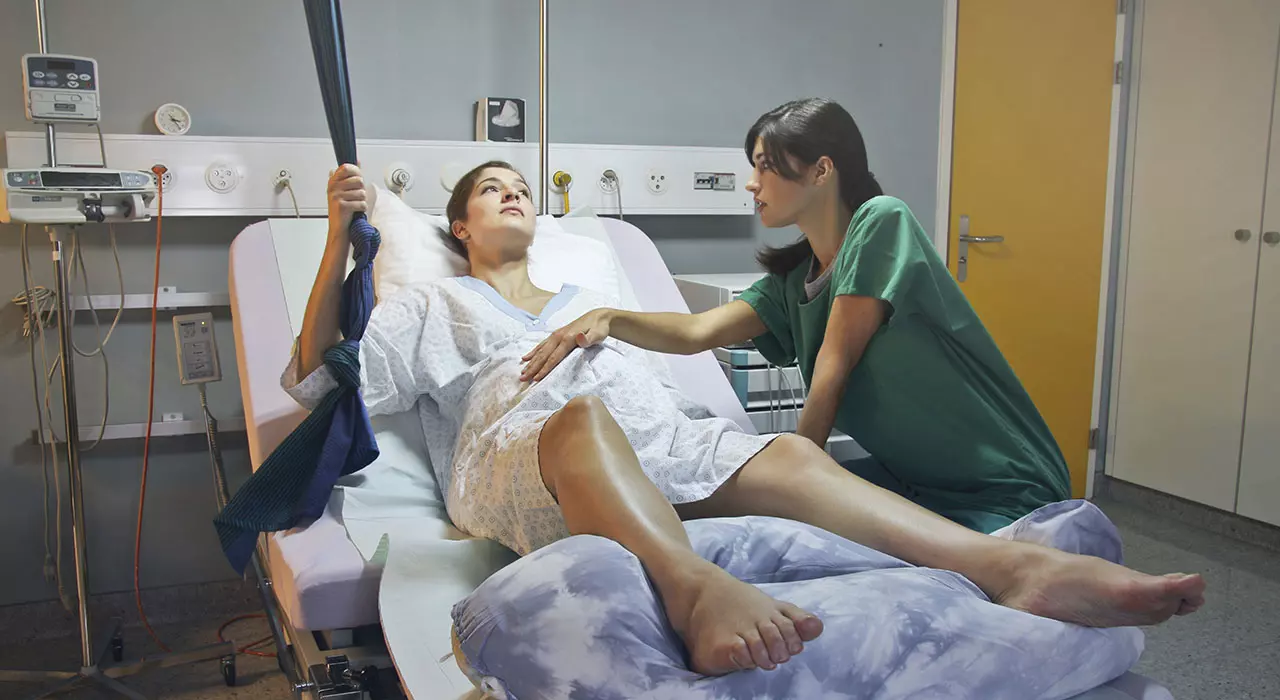
Compagina tus estudios con tu labor profesional a la vez que aumentas tus conocimientos en el ámbito del puerperio gracias a esta Postgraduate diploma 100% online"
Syllabus
The structure of the content has been designed by the best professionals in the sector in Puerperium, with extensive experience and recognized prestige in the profession, backed by the volume of cases reviewed, studied, and diagnosed, and with extensive knowledge of new technologies applied to teaching.

This Postgraduate diploma in Pelvic Floor in the Puerperium for Midwives contains the most complete and up-to-date scientific program on the market”
Module 1. Physiological Puerperium
1.1. Concept and Stages of Puerperium
1.2. Objectives of the Midwife in the Puerperium
1.3. Physical and Psychosocial Modifications
1.4. Care of Women and Newborns in the Immediate Puerperium
1.4.1. General Examination
1.4.2. Physical Assessment
1.4.3. Identification and Problem Prevention
1.5. Attention and Care of Women and Newborns in the Early Puerperium
1.5.1. Midwifery in the Early Puerperium
1.5.2. Health Education and Self-Care Tips
1.5.3. Newborn Screening and Newborn Hearing Impairment Screening
1.6. Control and Follow-up of the Late Post-partum Period
1.7. Hospital Discharge Midwife's Report at Discharge Early Discharge
1.8. Criteria for Good Care at the Primary Care Center
1.8.1. Criteria for Good Care in Primary Care Centers (Community of Madrid and Other Autonomous Communities)
1.8.2. Recommendations of the Clinical Practice Guide of the Ministry of Health (CPG)
1.9. Health Education in the Puerperium
1.9.1. Concept and Introduction Types of Intervention
1.9.2. Objectives of Health Education in the Puerperium
1.9.3. Midwife as a Health Agent in the Puerperium
1.9.4. Methodology. Main Techniques in Health Education: Expository Techniques, Classroom Research Techniques
1.10. Postpartum Workgroups: Postpartum Group and Breastfeeding Group
1.10.1. Postpartum Session: Objectives and Contents
1.10.2. Breastfeeding Session: Objectives and Contents
1.10.3. Newborn Care Session: Objectives and Contents
Module 2. Risk Situations in the Puerperium
2.1. Postpartum Hemorrhage
2.1.1. Concept, Classification, and Risk Factors
2.1.2. Etiology
2.1.2.1. Uterine Tone Disturbances
2.1.2.2. Tissue Retention
2.1.2.3. Trauma to the Birth Canal
2.1.2.4. Coagulation Alterations
2.1.3. Clinic and Management of Puerperal Hemorrhage
2.1.3.1. Assessment and Quantification of Hemorrhage
2.1.3.2. Medical and Surgical Treatment
2.1.3.3. Midwifery Care
2.2. Infections in the Puerperium
2.2.1. Puerperal Endometritis
2.2.2. Perineal Infection
2.2.3. Abdominal Wall Infection
2.2.4. Mastitis
2.2.5. Sepsis. Lethal Septic Shock Syndrome Staphylococcal or Streptococcal Toxic Shock
2.3. Thromboembolic Disease, Heart Disease and Severe Anemia in the Puerperium
2.3.1. Thromboembolic Disease in the Puerperium
2.3.1.1. Venous Thrombosis: Superficial, Deep and Pelvic
2.3.1.2. Pulmonary Embolism
2.3.2. Heart Disease in the Puerperium
2.3.3. Severe Anemia in the Puerperium
2.4. Arterial Hypertension, Preeclampsia and HELLP in the Puerperium
2.4.1. Management of the Woman with Arterial Hypertension in the Puerperium
2.4.2. Management of Women in the Puerperium after Preeclampsia
2.4.3. Management of Women in the Puerperium after HELLP
2.5. Endocrine Pathology in the Puerperium
2.5.1. Management of the Woman with Gestational Diabetes in the Puerperium
2.5.2. Thyroid Pathology in the Puerperium
2.5.3. Sheehan Syndrome
2.6. Digestive and Urinary Pathology
2.6.1. Main Digestive Pathology Conditions in the Puerperium
2.6.1.1. Crohn's Disease and Ulcerative Colitis
2.6.1.2. Fatty Liver
2.6.1.3. Cholestasis
2.6.2. Urinary Pathology in the Puerperium
2.6.2.1. Urinary Infections
2.6.2.2. Postpartum Urinary Retention
2.6.2.3. Urinary Incontinence
2.7. Autoimmune, Neurological and Neuromuscular Diseases in the Postpartum Period
2.7.1. Autoimmune Diseases in the Puerperium: Lupus
2.7.2. Neurological and Neuromuscular Pathology in the Puerperium
2.7.2.1. Post-puncture Headache
2.7.2.2. Epilepsy
2.7.2.3. Cerebrovascular Diseases (Subarachnoid Hemorrhage, Aneurysms, Cerebral Neoplasms)
2.7.2.4. Amyotrophic Lateral Sclerosis
2.7.2.5. Myasthenia Gravis
2.8. Infectious Diseases in the Puerperium
2.8.1. Hepatitis B Virus Infection
2.8.1.1. Management of the Postpartum Woman with Hepatitis B Virus Infection
2.8.1.2. Care and Monitoring of the Newborn of a Mother with Hepatitis B Virus Infection
2.8.2. Hepatitis C Virus Infection
2.8.2.1. Management of the Postpartum Woman with Hepatitis C Virus Infection
2.8.2.2. Care and Monitoring of the Newborn of a Mother with Hepatitis C Virus Infection
2.8.3. Human Immunodeficiency Virus Infection
2.8.3.1. Management of the Postpartum Woman with HIV Infection
2.8.3.2. Care and Monitoring of Newborns Born to HIV-Positive Mothers
2.9. Perineal Trauma and Abdominal Scar Dehiscence after Caesarean Section
2.9.1. Perineal Tears: Degrees of Tearing and Care
2.9.2. Episiotomy: Types and Midwifery Care
2.9.3. Abdominal Scar Dehiscence after Caesarean Section: Midwifery Care
2.9.4. Perineal Hematomas
2.10. Psychiatric Illness
2.10.1. Postpartum Depression (PPD)
2.10.1.1. Definition, Etiology, Detection of PPD
2.10.1.2. Medical Treatment and Midwifery Care
2.10.2. Puerperal Psychosis
2.10.2.1. Definition, Etiology, Detection of Puerperal Psychosis
2.10.2.2. Medical Treatment and Midwifery Care
Module 3. Pelvic Floor
3.1. Anatomy of the Female Perineum Types of Perineal Trauma
3.2. Episiotomy
3.2.1. Definition
3.2.2. Types of Episiotomy
3.2.3. Indications for Performing Episiotomy
3.2.4. WHO, SEGO and CPG Recommendations
3.3. Perineal Tears:
3.3.1. Definition and Types
3.3.2. Risk Factors
3.3.3. Prevention of Perineal Tears
3.4. Hematomas Midwifery and Care after Perineal Repair
3.4.1. Slight Tears (Types I and II)
3.4.2. Severe Tears (Types III and IV)
3.4.3. Episiotomy
3.5. Complications of Short-Term Trauma to the Perineum
3.5.1. Hemorrhages
3.5.2. Infections
3.5.3. Pain and Dyspareunia
3.6. Complications of Long-Term Trauma to the Perineum: Incontinence
3.6.1. Urinary Incontinence
3.6.2. Fecal Incontinence
3.6.3. Gas Incontinence
3.7. Complications of Long-Term Trauma to the Perineum: Prolapse
3.7.1. Definition and Classification of Genital Prolapse
3.7.2. Risk Factors
3.7.3. Medical and Surgical Treatment of Prolapses Pelvic Floor Rehabilitation
3.8. Conservative Treatment of Pelvic Floor Dysfunctions
3.8.1. Manual Techniques
3.8.2. Instrumental Techniques: Biofeedback and Electrostimulation and Other Instrumental Techniques
3.8.3. Postural Reeducation and Abdomino-Pelvic Training
3.9. Surgical Treatment of Pelvic Floor Dysfunctions
3.9.1. Slings and Netting
3.9.2. Colposuspensions
3.9.3. Colporrhaphy and Perineorrhaphy
3.10. Female Genital Mutilation (FGM)
3.10.1. Introduction and Social and Demographic Context of FGM Epidemiology
3.10.2. Current Practice of FGM
3.10.3. Types of MGF
3.10.4. Consequences of the Practice of FGM on Women's Health
3.10.5. FGM: Strategies for Prevention, Detection and Intervention by Midwives
3.10.6. Legal Framework Regarding FGM

A unique specialization experience, key and decisive to boost your professional development"
Postgraduate Diploma in Physiology and Pathology in the Puerperium for Midwives.
If you are a midwife or are interested in expanding your knowledge of physiology and pathology in the puerperium, the Postgraduate Diploma in Physiology and Pathology in the Puerperium for Midwives program from TECH Global University is perfect for you. This online program, designed by experts in the field, will allow you to deepen your knowledge of the physiological and pathological changes that occur in the puerperium, in order to prevent, identify and treat possible complications. During the online classes, you will have the guidance and support of specialized teachers, as well as didactic tools and state-of-the-art resources, so that you can acquire the theoretical and practical knowledge necessary for your professional development.
Learn more in detail about this fascinating profession with TECH.
Do you know why TECH is considered one of the best universities in the world? Because we have a catalog of more than ten thousand academic programs, presence in multiple countries, innovative methodologies, unique academic technology and a highly qualified teaching staff. Some of the topics that we will address in this program include the physiology of the normal puerperium, the main pathologies that may appear in this period, the care of the newborn and its adaptation to the environment, among others. The online mode of this program will allow you to access the classes from anywhere and at the time that suits you best, without having to travel to any university campus. Don't wait any longer to specialize in physiology and pathology in the puerperium for midwives. Enroll today in the Postgraduate Diploma in Physiology and Pathology in the Puerperium for Midwives from TECH Global University and take your career to the next level!